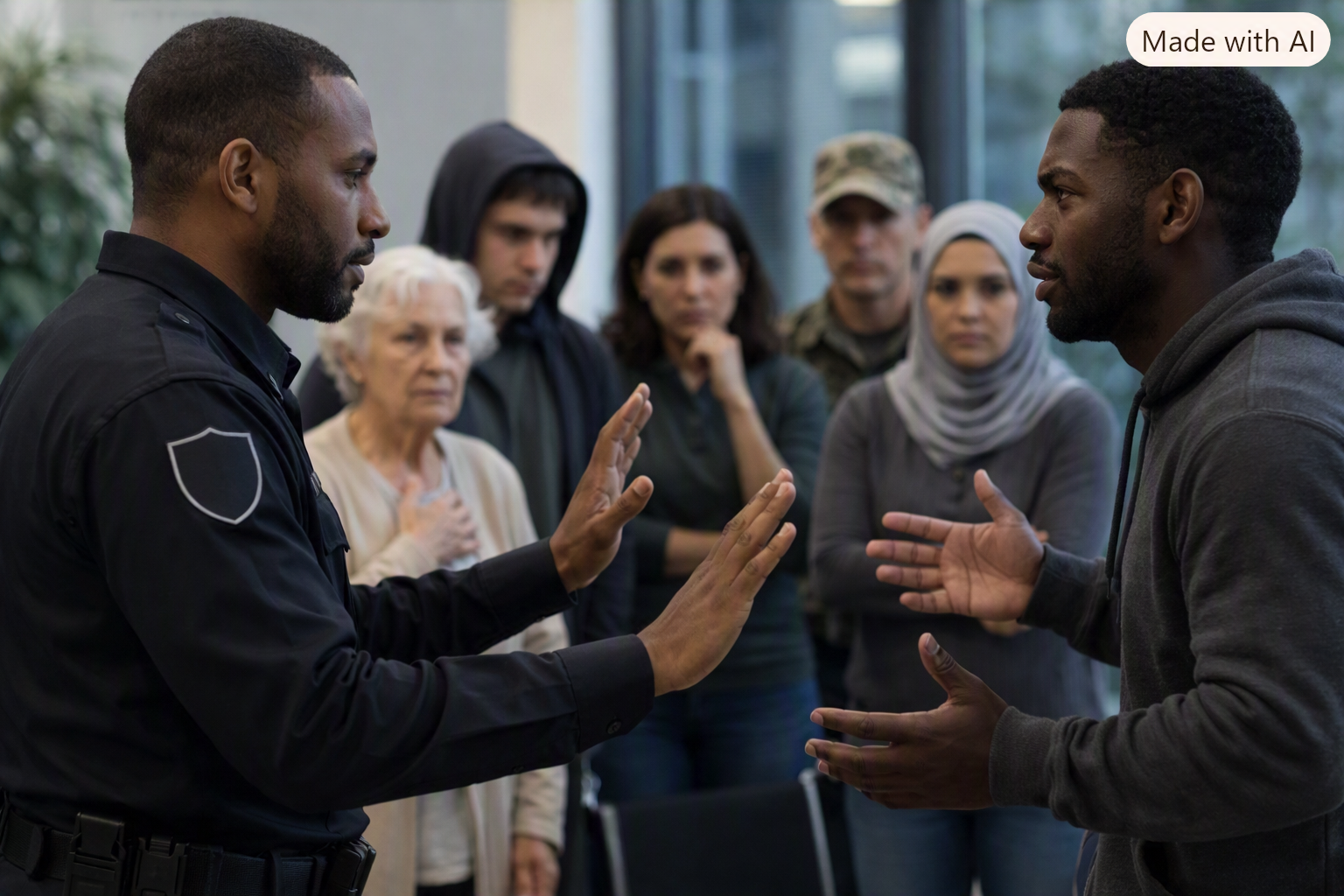
De-Escalation Techniques & Special Populations for Security Professionals
On-Demand CourseCourse Overview
Take this comprehensive, on-demand continuing education course designed to sharpen de-escalation skills for security professionals working with vulnerable populations. Through 8 practical modules, learn proven communication techniques for mental health crises, substance impairment, cognitive disabilities, and other high-risk encounters — grounded in real-world law enforcement experience. This certified 6-hour program delivers the skills needed to reduce use-of-force incidents and meet continuing education requirements across multiple states.
What's Included
- • 6 hours of comprehensive training
- • Professional certification upon completion
- • Access to course materials
Learning Objectives
- • Foundations of De-Escalation
- • Mental Health Crises & Behavioral Emergencies
- • Substance Impairment & Intoxication
- • Cognitive & Developmental Disabilities
- • Homeless & Transient Populations
- • The Elderly, Juveniles & Victims of Trauma
- • Legal, Ethical & Documentation
Course Content
Foundations of De-Escalation
- • Understand the Concept of De-Escalation
- • Identify Stages of Escalation
- • Apply Core Techniques
- • Avoid Common Mistakes
Mental Health Crises & Behavioral Emergencies
- • Recognize Common Mental Health Conditions
- • Handle Suicidal Individuals
- • Respond to Specific Conditions (panic attacks, psychosis, mania, PTSD)
- • Apply a Five-Step Crisis Model
- • Identify Medical Emergencies
Substance Impairment & Intoxication
- • Recognize Impairment by Category (alcohol, opioids, stimulants)
- • Adjust Communication Strategies
- • Identify and Respond to Opioid Overdose
- • Manage Dual Impairment and Mental Health Crises
- • Recognize Medical Emergencies and Document Effectively
Cognitive & Developmental Disabilities
- • Understand Disability-Related Behavior
- • Recognize and Respond to Autism
- • Adjust Communication for Intellectual Disabilities
- • Differentiate Brain Injury or Dementia from Intoxication
- • Understand Legal Duties Under the ADA
Homeless & Transient Populations
- • Handle Common Encounters (trespassing, loitering, hygiene complaints, encampments)
- • Understand Trauma Responses
- • Enforce Rules Respectfully
- • Provide Practical Assistance
- • Avoid Harmful Assumptions
The Elderly, Juveniles & Victims of Trauma
- • Recognize Aging and Medical Conditions
- • Handle Encounters with Minors Safely
- • Adopt a Trauma-Informed Approach
- • Understand Duty Around Suspected Abuse
- • Protect Victims and Criminal Cases
Putting It All Together
- • Analyze Situations
- • Select Appropriate Responses
- • Recognize Critical Moments (when to transition to seeking assistance)
- • Avoid Common Mistakes
- • Trust Your Core Skills
Legal, Ethical & Documentation
- • Understand the Limits of Your Authority
- • Comprehend Detention and Use of Force
- • Apply Relevant Laws to Your Behavior (including ADA)
- • Handle Mental Health Hold Situations Appropriately
- • Document Effectively
Your Instructor
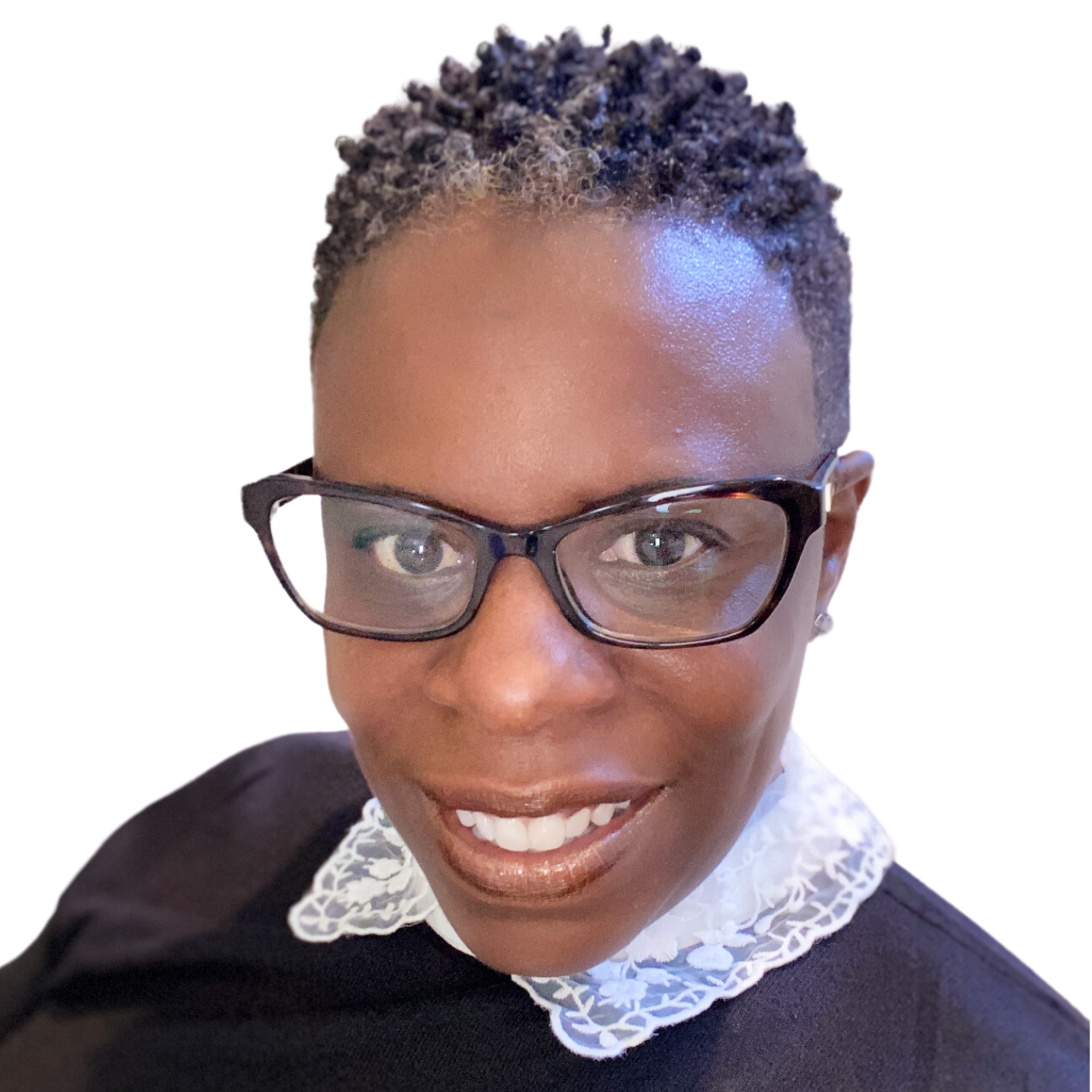
Catherine D. Flowers
Catherine Flowers brings 30+ years of investigative expertise as a licensed PI and FAA-certified drone pilot. A passionate NCAPI speaker and NC Education Committee member, she specializes in complex litigation, drawing from extensive experience that includes criminal investigations.
Frequently Asked Questions
Do I need any prior training to take this course?
No. This course is designed for security professionals at every experience level, from officers who are brand new to the field to those pursuing continuing education hours. The course builds from the foundation in Module 1, so no prior de-escalation or crisis-response training is assumed.
Is this course live or self-paced?
This is a fully on-demand, self-paced course. You can complete the 8 modules on your own schedule, and each module ends with a knowledge check to reinforce what you've learned.
How long does the course take to complete, and how many CE hours does it provide?
The course totals 6 hours of continuing education credit, delivered across 8 modules covering foundational techniques, specific populations, and legal/documentation requirements.
What's required to pass and receive my certificate?
You'll need to score at least 70% on the final exam to complete the course and receive your certificate.
Does this course teach word-for-word scripts for handling a crisis?
No — and intentionally so. Rather than memorized scripts, which the course teaches are ineffective in unpredictable situations, you'll learn to read body language and vocal cues, then apply a set of adaptable techniques suited to the specific person and situation in front of you.
Who is this course best suited for?
This course is for unarmed and armed security officers, private investigators, and anyone pursuing continuing education hours in de-escalation and crisis response — no prior specialized training required.
What Our Students Say
"Catherine Flowers delivered exceptional active shooter response training for our organization that went far beyond basic protocols. Her real-world experience and emphasis on practical application made the training immediately valuable for our staff. She understands the unique challenges faced by victim service organizations and tailored the content to address our specific needs. The combination of situational awareness training and hands-on scenarios gave our team the confidence to implement critical safety protocols. Her professional approach and extensive knowledge made this one of the most valuable training investments for our staff's safety preparedness."
Rhonda Raney
Executive Director of InterAct in Raleigh
"Mrs. Flowers, I cannot thank you enough for including me in your class on Monday. I learned so much from you and your class. The biggest thing I took away from it was learning to recognize my own self-worth. I have been in this business for 10 years and retired from law enforcement, and I thought I knew a lot about this profession. But your class reminded me that I need to know my worth, value my experience, and not sell myself short. Thank you so much for sharing your knowledge, experience, and encouragement. You truly made a difference for me, and I am very grateful I had the opportunity to learn from you. I have already told all of my law-enforcement friends about you! You are an amazing instructor, and I’m so glad I had the opportunity to take your class."
K. Wade
Investigator