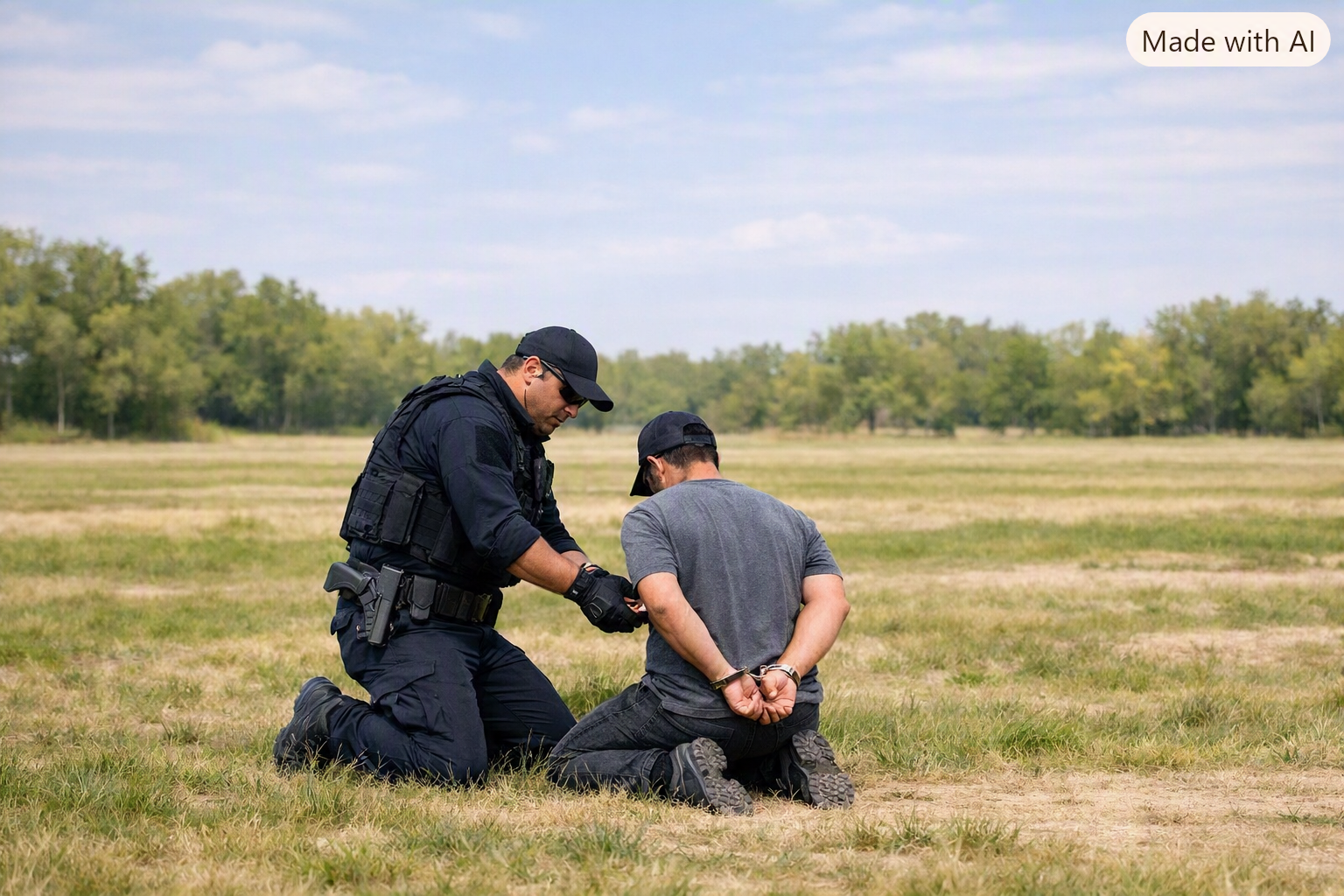
Use of Force: Principles, Levels, and Legal Limits
On-Demand CourseCourse Overview
NCPPSB-Approved Live Virtual Training: Active Shooter Emergency Response Join this interactive, live virtual course that fulfills NCPPSB continuing education requirements while preparing security professionals for active shooter emergencies. Through real-time instruction, learn critical threat assessment, life-saving protocols, and emergency response strategies based on law enforcement best practices. This certified program delivers hands-on virtual training that meets multi-state requirements for active shooter response.
What's Included
- • 4 hours of comprehensive training
- • Professional certification upon completion
- • Access to course materials
Learning Objectives
- • The use-of-force continuum — matching your level of force to the level of threat or resistance you face, never more, never less
- • Your legal authority as a security officer vs. a police officer, and why that distinction matters
- • How to read threat and choose an appropriate response, including staying in "Condition Yellow" (relaxed alertness) throughout your shift
Course Content
Course Overview & Meet the Instructor
- • Course structure and the four-module format
- • Approximately 4 hours of continuing education, self-paced or instructor-led
- • 30-day access window to complete the course
- • Important note on state law: authority, detention, and use-of-force rules vary by state and by employer policy — this course teaches the general framework, not your specific jurisdiction's law
Understanding the Use-of-Force Continuum
- • The core use-of-force continuum model
- • Force must always match the threat — never more, never less
- • Your authority is limited as a private citizen, not equivalent to police authority
- • Proper documentation is as crucial as the decision-making itself
- • Report-writing fundamentals, including how and when to write an executive summary
The Law, Your Authority & Why You're Not the Police
- • The "reasonable officer" standard that governs how force decisions are judged
- • As resistance decreases, your force must decrease accordingly
- • Verbal aggression alone never justifies physical force
- • Every force decision must be defensible under this standard
Reading Threat & Choosing a Response
- • Recognizing that your authority is limited compared to law enforcement
- • Basing detainment decisions on observed facts, not assumptions or hunches
- • Contacting law enforcement promptly — a sign of professionalism, not failure
- • Distinguishing "unable" from "unwilling" before treating behavior as resistance
- • Maintaining Condition Yellow (relaxed alertness) throughout your shift
Your Instructor

Catherine D. Flowers
Catherine Flowers brings 30+ years of investigative expertise as a licensed PI and FAA-certified drone pilot. A passionate NCAPI speaker and NC Education Committee member, she specializes in complex litigation, drawing from extensive experience that includes criminal investigations.
Frequently Asked Questions
What does this use-of-force course cover?
It teaches the use-of-force continuum, your legal authority as a security officer, how to read threat and choose an appropriate response, and what to do — including reporting — after force is used.
Certification & Credit Hours:
This course provides 6 hours of NCPPSB-approved live virtual instruction required for license renewal. Upon completion, participants receive same-day certificates documenting their fulfilled continuing education requirement, which satisfies the mandatory live training hours needed every two years for North Carolina Private Investigator and Security Guard Company license renewal.
What specific skills will participants learn?
Participants will develop: Threat assessment capabilities Emergency response protocols Situational awareness techniques OODA Loop implementation Critical decision-making skills
What is your cancellation policy for live instruction?
Students must cancel their enrollment at least 24 hours prior to the scheduled course start time to receive a full refund or reschedule the course. This policy is in place because we often schedule small classes, sometimes with only one student, and cancellations impact preparation and scheduling.
What happens if I cancel within 24 hours of the course?
Cancellations made within 24 hours of the course start time are non-refundable. However, we can work with you to reschedule your training for a future session, depending on availability.
Can I transfer my registration to another person if I can’t attend?
Yes, you may transfer your registration to another individual with prior notification. Please contact us at least 24 hours in advance to make the necessary arrangements.
What if the course is canceled by the instructor?
If we must cancel the course for any reason, you will be notified as soon as possible and offered a full refund or the option to reschedule for a later dat
How soon will I get my certificate after completing the course?
You will receive your certificate of instruction immediately after successfully completing the course, whether it's live or on-demand. For live courses, certificates are provided on the same day upon course completion.
What if there is a delay in receiving my certificate?
If you experience any delay, please contact us immediately, and we will ensure your certificate is sent to you promptly.
Is the certificate valid for licensing renewal?
Certificate Information for This Course If you are taking this course, your certificate will indicate **Live Instruction** as required by North Carolina licensing guidelines. In North Carolina, learners must complete **6 hours of live or virtual instruction with an actual instructor** and an additional **6 hours of on-demand instruction** to meet the 12-hour requirement for license renewal. This course satisfies the live instruction portion, and we are here to help you complete the on-demand hours as well. If you have any questions or need guidance, don’t hesitate to reach out!
What Our Students Say
"Catherine Flowers delivered exceptional active shooter response training for our organization that went far beyond basic protocols. Her real-world experience and emphasis on practical application made the training immediately valuable for our staff. She understands the unique challenges faced by victim service organizations and tailored the content to address our specific needs. The combination of situational awareness training and hands-on scenarios gave our team the confidence to implement critical safety protocols. Her professional approach and extensive knowledge made this one of the most valuable training investments for our staff's safety preparedness."
Rhonda Raney
Executive Director of InterAct in Raleigh